Being engaged feels like magic in its own right. But once the honeymoon phase is over, you know there’s going to be this: how to plan a wedding and still retain your sanity? That’s what this wedding timeline is all about.
No matter if you are organizing an Indian wedding or another type, here is a wedding planning checklist from start to finish. Consider this checklist for wedding timeline as your personal roadmap that guides you through all the necessary steps in an uncomplicated way.
Just Got Engaged – Now What?
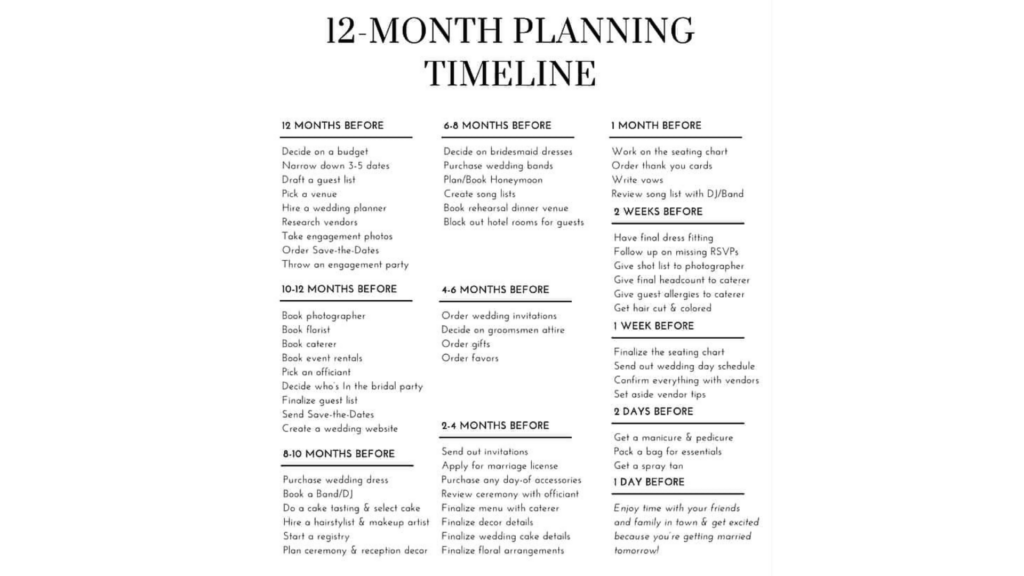
Before you book everything tomorrow, take a deep breath first. The next couple of weeks you’ll spend on dreaming, family coordination, and laying down a foundation.
Tackle the Big Three
- Budget: Get together with your fiancé’s families and see how much money will be allocated by each party. Remember that it’s better to leave a buffer of 10-15% of the total.
- Number Of Guests (Approximate): Come up with an approximate number of attendees. It will be easier to adjust in the future when you know more about venues.
- Date And Location: Look into auspicious muhurats if needed and come up with 2-3 dates and 2 locations.
Begin with Research, Not Bookings
- Search for venues, planners, and photographers for their style and availability.
- Use a spreadsheet or wedding planner app to record your ideas and costs.
- Ask newlywed friends what they would have done differently.
Here lies the opportunity to align yourself before the action begins. Once these three pillars (budget, number of guests, date/city) are in place, it’s time to progress to the 12-month wedding timeline.
12-10 Months Before – Nail Down the Foundation
It is all about locking those which are booked at the earliest. The golden rule in India is always: date + number of guests + budget, followed by the venue and then top-notch vendors.
Budget – Your North Star
- Confirm the overall budget allocation (venue 40%, outfits 20%, decor 12%, photo/video 10%, miscellaneous 18%). Adapt according to your preferences.
Guests to Invite – Be Quick on the Draw
- Both families independently make their guest lists and then merge them into three categories: Essential, Desirable, Nicer To Have.
- For destination wedding, assume a lower acceptance rate; for peak season weddings in the home city, assume higher attendance.
Destination vs Home Town?
- In case of destination wedding: Your planner will identify and shortlist 3-5 venues based on seasonality (avoid monsoons) and cost calculations.
- For home town wedding: identify 5-7 venues according to your requirements (guest count and budget) and visit the same with your wedding planner.
Planner – Book Now and Sleep Tight
- This is especially important in case of destination wedding and multi-function Indian weddings.
- Shortlist 2-3 planners through interviews and check references and understand what is being offered by them.
Venues – Secure Your Spot!
- Venues get booked in advance for 12-18 months, more so if you want to have a November-February wedding.
- Make sure you lock down your ceremony and reception venues by paying a down-payment (usually 25%). Understand the inclusions and exclusions.
Smart step: Immediately after booking the venue, purchase wedding insurance. It ensures safety of your deposit in addition to protection from unexpected cancellations.
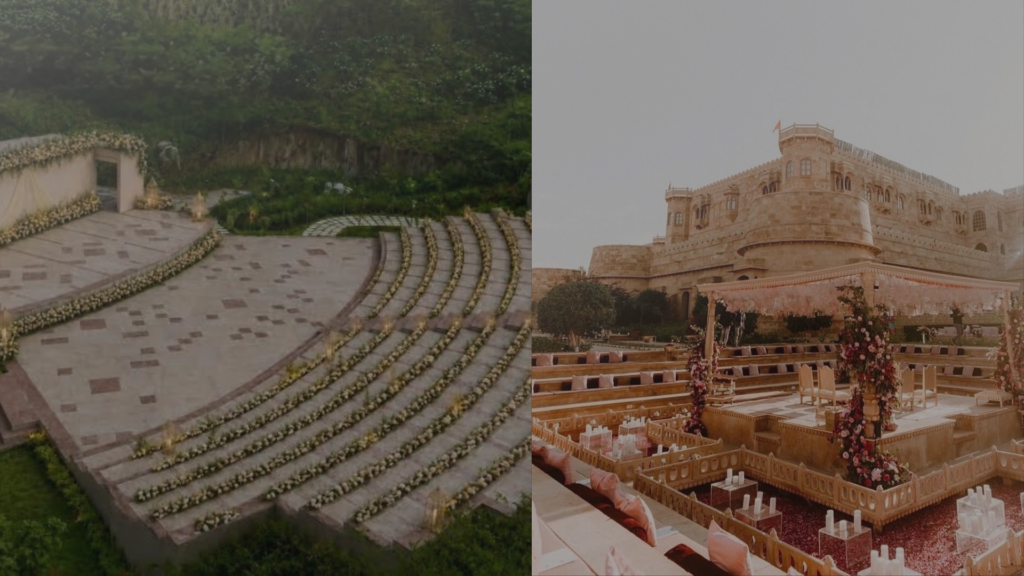
9-7 Months Before – Design, Vendors, and Style
With the venue selected, it’s now time to assemble your vendors list and decide how you want your wedding to look.
Photographer & Videographer
- Top photographers book up to 8-12 months before your wedding. Check out their wedding albums in their entirety, meet them in person and sign the contract early.
- Understand what’s included: number of pictures, length of highlight video, footage and turnaround time.
Decor – Theme, Colour Scheme, and Flowers
- Select your wedding theme and colours. Share mood boards with your decorator.
- Hire your decorator/florist and tell them what you would like incorporated: mandap design, backdrop design, entrance, centrepieces and lights.
- In case of multiple celebrations (mehandi, sangeet, haldi, reception), style for each event should be different.
Catering – Menu, Tasting, and Dietary Requirements
- Should catering not be provided by the venue, select 2-3 caterers and set up tastings.
- Decide on menus for each event, live counters, local specialties, and children’s menu, with dietary requirements (vegetarian/Jain/gluten-free).
- Confirm service type (buffet or plated), number of waiters, and cutoff timing for final headcount.
Entertainment – Keep the Momentum Up
- Arrange DJ or live music for the sangeet and reception. For the traditional element, plan dhol or folk artists.
- Give your planner a do-not-play list as well as must-play songs. Coordinate timings of performances.
This is where your wedding begins coming alive. No longer are you booking vendors; you’re creating experiences.

6 Months Before – Wedding Attire, Invitations, and Guest Coordination
With six months left to go, concentrate on personal touches and guest coordination. It is also the time to start building the anticipation!
Wedding Attire – Begin Early, Alter Late
- Start looking for outfits now. Custom lehengas and sherwanis require 4-6 months for alteration and stitching.
- Make sure to schedule fittings 3 and 1 month prior to the wedding date; do not forget about shoes, jewellery, and accessories.
- Don’t forget about family costumes; parents and siblings sometimes need some lead time to get tailoring done.
Invitations – Send Your Save-the-Dates First
- Send save-the-date invitations (digital or physical) 6 months prior, especially if it is a destination wedding or out-of-town guests.
- Design and order your formal invitation cards to be sent out in 2-3 months; don’t forget to include RSVP deadline, accommodation information, and website link (if applicable).
Guest Accommodation – Book Room Blocks and Organize Travel
- Organize room blocks in the place of celebration or nearby hotels; arrange for group rate and provide guests with booking codes.
- If you celebrate your destination wedding, prepare a short travel guide including nearest airport/railway station, cab options, and recommended period of stay.
- Consider sending out welcome kits including snacks and itineraries.
This is the stage when it is all about making your guests’ life easy and frictionless.

3 Months Out – Confirm, Chase, and Finalize
This is where it’s all about getting all the fine print down and confirming everything.
Vendor Confirmations
- Confirm all your vendor contracts, payments, and deadlines. Give everyone a master timeline with your planner and key vendors.
- Finalize all the ranges of numbers and special food for your catering arrangements. Confirm your decorations’ loading/unloading times at the venue.
Invitation/R.S.V.Ps
- Your RSVP Team will send out formal invitations 8-10 weeks before the wedding ceremony.
- They will monitor your R.S.V.P. responses weekly as your deadline draws near. Make adjustments to your seating chart based on response rate.
Beauty & Wellness
- Begin your bridal skincare routine, hair and make-up trials. Arrange for your final hair and make-up trials 4-6 weeks before the wedding day.
Legal/Administrative
- For destination weddings, see passport/visa requirements for international guests.
This is the “no new ideas” zone. Stay focused on following through with the plan, verifying details, and avoiding the addition of any new elements.

1 Month Before – The Final Countdown
It’s your final stretch! You need to focus on getting all logistics squared away.
Final Guest Count and Catering
- Give the final head count to the venue and catering team. Ensure the seating arrangement and table layouts have been finalized.
- Reverify all the special dietary needs and children’s meal. Decide on the bar packages and non-alcoholic drinks.
Day-of-Timeline & Vendor Briefings
- Your wedding planner will create an exact minute-to-minute wedding timeline for each event (mehendi, sangeet, haldi, wedding, reception) and share it photographer, DJ and venue manager.
- Your wedding planner will appoint a point person for specific duties (elders’ coordination, gifts distribution, changing outfits, emergency kit management).
Outfits Final Fitting and Packing
- Get your final fitting of outfits done. Steam/press all outfits just a few days before the wedding.
- Pack an emergency kit for the big day (safety pins, fashion tape, painkillers, snacks, water, charger and make-up).
Transportation and Accommodations Final Review
- Your hospitality team will confirm airport/railway transportation for arriving guests. Include information about drivers and pick up instructions.
- Your RSVP team will reconfirm hotel room blocks and early check-ins/late check-outs when needed.
This month is all about execution and no experimenting. Follow your plan and your team.
Final Week – Execution Only
During the last week, you need to save your strength and just let your planner do his job.
What To Do
- Participate in vendor final walk-through meetings with your planner. Clarify load-in times, power requirements, and setup plans.
- Do a quick review of day-of timeline with family point persons. Make it short.
- Prepare all your wedding-day bags: outfit, jewellery, documents, emergency pack, and vendor payment envelopes.
What Not To Do
- Don’t try any new skin care treatment or make any drastic hair decisions.
- Don’t introduce any new decoration ideas or menu changes.
- Don’t micromanage vendors – your planner will take care of it.
Only one metric of success this week – get your rest and be present and kind to yourself.
Wedding Schedule – Sample Timeline
Every wedding has its own distinct wedding timeline, but this one can help you get a practical understanding of a sample flow of events for a North Indian multi-function wedding. Customize as per your requirement.
Mehendi (Day 1)
- 11:00 AM: Decoration setup done
- 12:00 PM: Arrival of guests and welcome drink
- 12:30 PM: Mehendi artist starts
- 2:00 PM: Lunch buffet
- 4:00 PM: Entertainment time and Photo Booth
- 6:00 PM: Evening snacks
- 8:00 PM: DJ and Dancing
- 10:30 PM: Dinner and winding up
Sangeet (Day 2)
- 5:00 PM: Decoration setup and soundcheck
- 6:30 PM: Arrival of guests
- 7:00 PM: Family dance performances
- 8:30 PM: Entry of couple and performance
- 9:30 PM: Dance floor opens up
- 11:00 PM: Dinner
- 12:30 AM: Vote of thanks and close
Wedding Ceremony + Reception (Day 3)
- 3:00 PM: Haldi (If on the same day) / Pre-Ceremony Rituals
- 5:00 PM: Baraat arrival and welcoming
- 5:30 PM: Ceremony starts
- 7:00 PM: Phera and sindoor ceremony
- 7:30 PM: Family photographs
- 8:00 PM: Entrance to reception
- 8:30 PM: Dinner
- 10:00 PM: Cake cutting and speeches
- 10:30 PM: First dance and open floor
- 12:00 AM: Vidaai
Distribute this schedule to your planner, photographer and the event coordinator of the venue.
Wedding After-Match Jobs – Wrapping Up Right
It’s over, but a few jobs are yet left to be done.
Vendor Settlements & Appreciation Messages
- Settle all pending bills for vendors, as per contract terms. Obtain final bills and invoices.
- Write thank you notes to vendors and helpers. Appreciation goes a long way!
Return Rented Things and Gift Log
- Return rentals like decor items, groom’s suits and jewellery etc., to save yourself from fines.
- Sort wedding gifts and maintain a list of gifts for thank-you cards.
Photography/Video Backup & Memory Storage
- Get information about when you will receive photos/videos from your photographer.
- Request a sneak preview if you wish to.
- Save all the digital photos/videos and make an album for your family members.
Planner’s Pro Tips – Tiny Details That Make a World of Difference
These are the little things that end up making a huge difference.
- Source of truth: Use one central document or software to keep track of budget, guest list, vendors, and timelines.
- Allow for buffer budget and time: Add 10-15% buffer to budget and 15-20% time to all timeline estimates.
- Family point person: Have one sane member from both sides for handling elders, gifts, and any last-minute queries.
- Pack an emergency bag: Needle, safety pins, band-aid, fashion tape, water, food, chargers, blotting papers, and sewing accessories.
- Preserve your energy: Get plenty of sleep the week before, eat at regular intervals, and delegate ruthlessly. Your attendance is more important than perfection.
FAQs – Fast Answers to Common Questions
How far ahead should I begin my planning according to the wedding timeline?
12-14 months out from your preferred date. For destination weddings or seasonal dates (November to February), aim for 14-18 months.
What is the first item on the to-do list?
Venue. It secures your date and everything else revolves around it – guest count, vendors, and theme.
When should invitations be sent out?
Save the Dates at 6 months, invitations at 8-10 weeks before the wedding, with RSVP deadlines at 3-4 weeks out.
How can I deal with sudden guest additions?
Leave some leeway in the guest seating arrangement and caterer count. For close family members, most venues will provide additional plates upon request.
Do I need a planner?
Absolutely, if you have a multi-event Indian wedding or destination wedding. They save a lot of time and effort and keep things running smoothly. If not, then a dedicated member of your family with a timeline will suffice.
What if my schedule gets derailed?
First priority: Venue, catering, and photography cannot change. Decor and entertainment can change. Communicate as early as possible with your vendors and utilize your wedding planner to solve any potential problems.
Your Wedding Planning Timeline – In One Glance
- Just engaged: Budget, rough guest list, date/city, research but don’t book yet.
- 12-10 months: Guest categories, destination/home, planner, and venue confirmed.
- 9-7 months: **Photographer, decorator, caterer and entertainment. Theme and colour scheme defined.
- 6 months: Start planning outfits, send save the dates, and guest accommodation and travel arrangements.
- 3 months: Confirm vendors, send invitations, RSVP tracking, start beauty trials.
- 1 month: Finalize guest list, day of timeline, final fittings, make emergency kit.
- Final week: Walkthroughs, bag packing, relax and let your planner do the magic.
- Wedding day: Stick to the schedule, be present, and have fun.
- Post-wedding: Make payments, return rentals, organize photos, and documentations.
With this wedding timeline checklist in place, customized for your family’s requirements, you will go from being overwhelmed to being organized. Weddings are marathons, not sprints—take these steps and you’ll reach the finish line with a smile on your face.


