If you have decided to plan your wedding, chances are that the phrase “wedding stationery” has already crossed your path many times. However, it would be helpful to know what kinds of stationery belong to your wedding and how you can coordinate all those pieces of paper and digital invitations so that they fit together without going insane. Here is a guide on all the bits and pieces of your wedding stationery suite and when to plan each of them.
What Comes Under Wedding Stationery?
Wedding stationery is not simply an invitation. It is an ecosystem of the different printed and digital elements that will help you communicate all the necessary information to your guests before, during, and after your wedding ceremony. Think of your wedding stationery as the toolkit for your wedding communication.
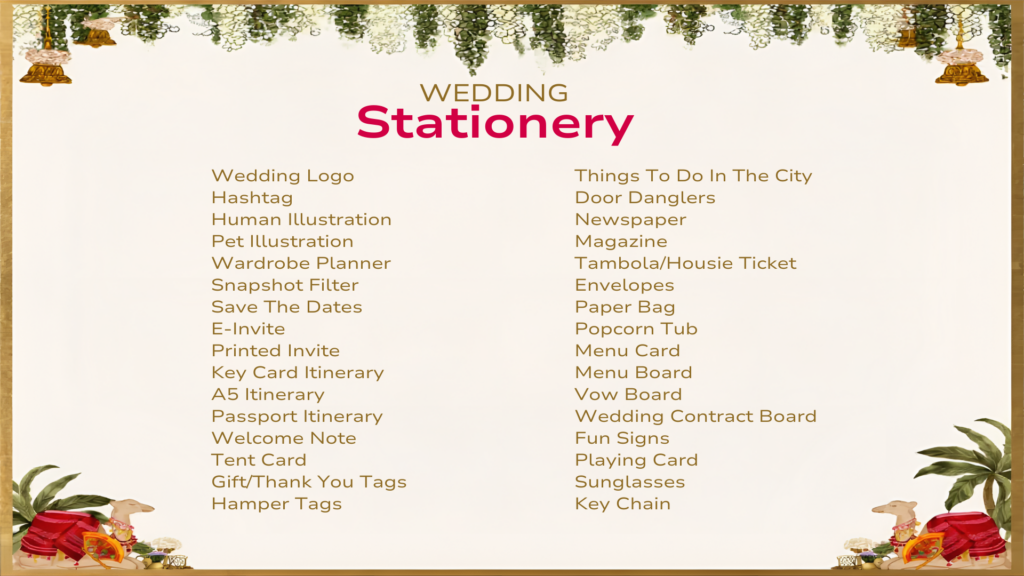
Typical wedding stationery list includes:
- Save-the-date invitations
- Formal wedding invitations and RSVP cards
- Digital wedding invitations and websites
- Welcome notes and itinerary cards
- Room cards, key sleeves, and luggage tags (for destination and multi-day weddings)
- Menu cards, table numbers, and place cards
- Wedding signage (welcome boards, directional boards, bar menu)
- Gift tags and thank-you cards
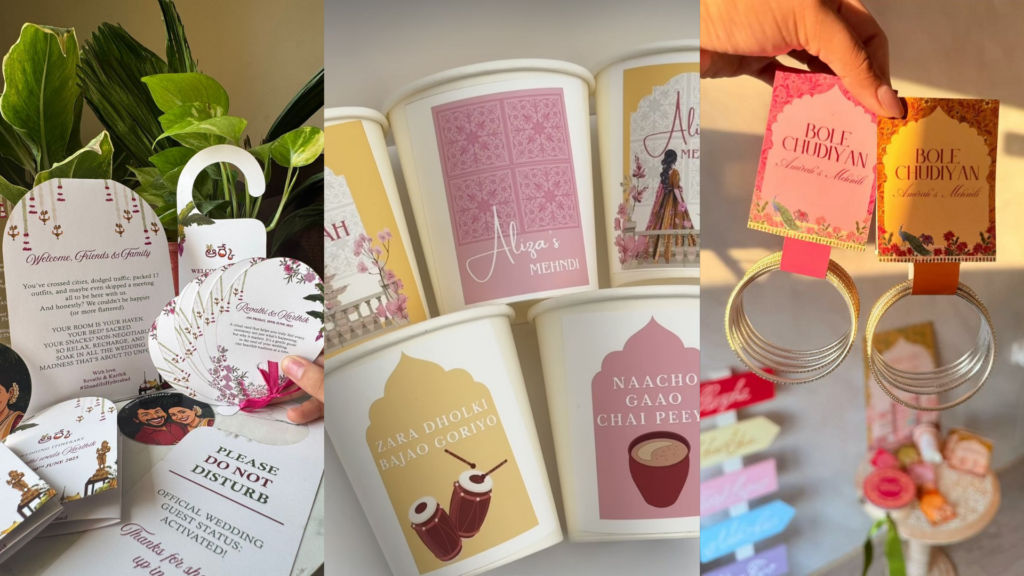
Whereas for Indian wedding invitations, the number can increase further due to hosting of various functions, like mehendi, sangeet, haldi, reception and others.
Save-the-Date
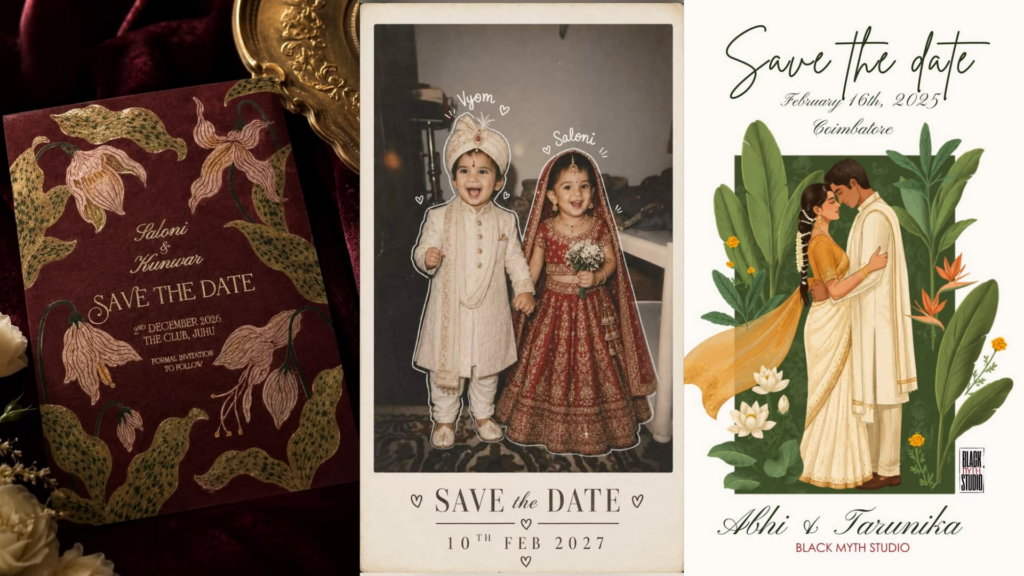
Your first official notice is a save the date invitation that will simply remind guests of your wedding day and location so that they can mark it on their calendar.
When to Send Save-the-Dates
- Regional/local weddings: 6–8 months prior to the wedding date
- Holiday/Destination weddings: 8–10 months prior (guests need more time for traveling)
What to Include?
Nothing complicated here. Just put:
- Both names
- Date of your wedding
- Place or city name and state
- Phrase like “Formal wedding invitation to follow”
- Your wedding website link (if any)
Save-the-date can take different formats, starting from postcards or magnets up to electronic file. This one is also good way to introduce your wedding invitation ideas visually.
Formal Wedding Invitation
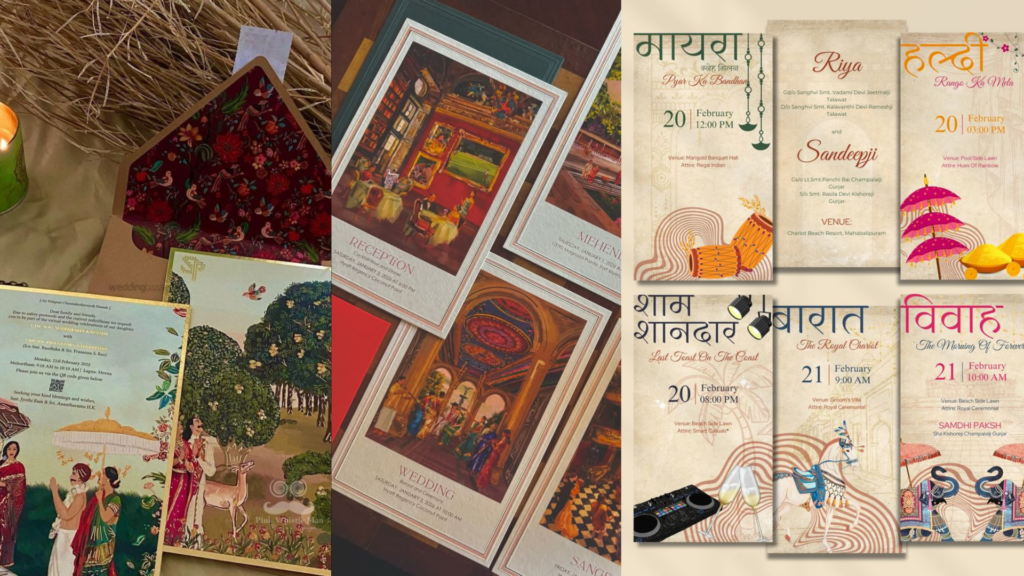
This is the star of your wedding invitation suite. This is what the guests will save and cherish, so why not spend some time on it?
Timing
- Ordering: 4-6 months prior to your wedding
- Sending out: 6-8 weeks prior for local guests and 3-4 months prior for international or destination guests
Contents of the Invitation Suite
Classic wedding invitation suite can contain:
- Main invitation card
- RSVP card (can be replaced by a web link to your wedding website)
- Details card (hotel, transportation, dress code info)
- Envelopes inside and outside
When it comes to Indian wedding invitations, you should consider having separate cards for every pre-wedding event along with inserts for venue maps.
Digital Invitation
However, not everyone requires (and not everyone will want) the physical invitation card. Digital wedding invitation can serve as an alternative for more casual weddings, as a fallback for late invitations, and even as a supplement to your printed set.
Pros and Cons
Pros:
- Inexpensive (no printing costs and postage fees)
- Quick updates in case of changes in information
- Possibility to link maps, registries and other useful information
Cons:
- Not tangible
- If not designed properly, can appear impersonal
Usually, digital invitations are used for bachelor/bachelorette parties, rehearsal dinners or wedding brunches and not for the main ceremony invitation.
Wedding Website
Wedding website is your hub for all logistical issues. This is where people can find information regarding:
- Your whole event schedule
- Accommodation and travel information
- The opportunity to RSVP and pick the meal choice
- Links to the registries
- FAQs (about parking, dress code, policy about children, etc.)
Don’t forget to put a link on your save-the-date, invitation, and additional information cards.
Room Cards / Key Sleeves
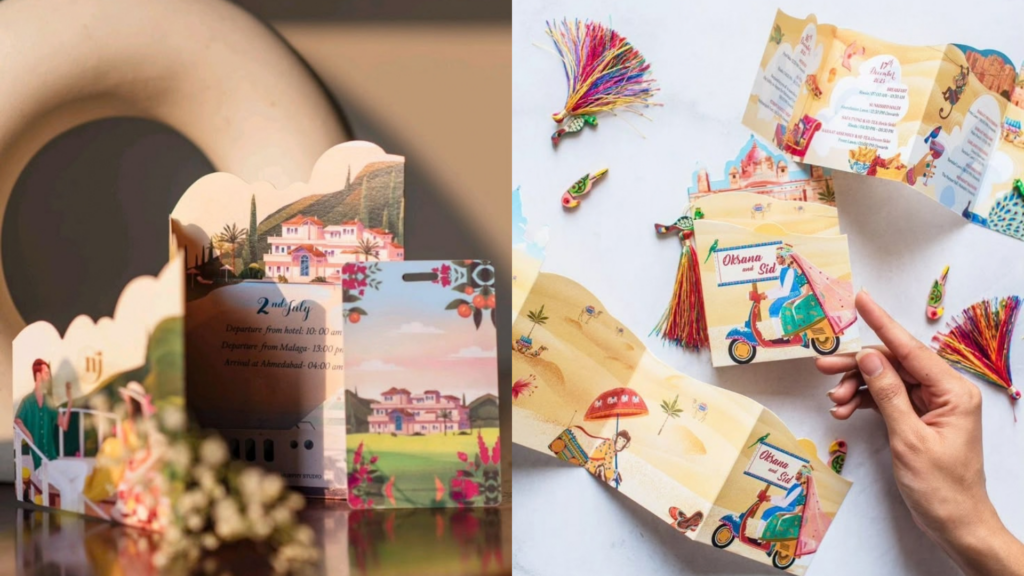
If you’re making hotel arrangements or distributing welcome bags, room cards or key sleeves make a little extra effort. These will usually contain:
- Name of guest(s)
- Hotel name and location
- Times for check-in/out
- Website or other information to contact with any queries
This will particularly help if you’re planning a destination wedding.
Luggage Tags
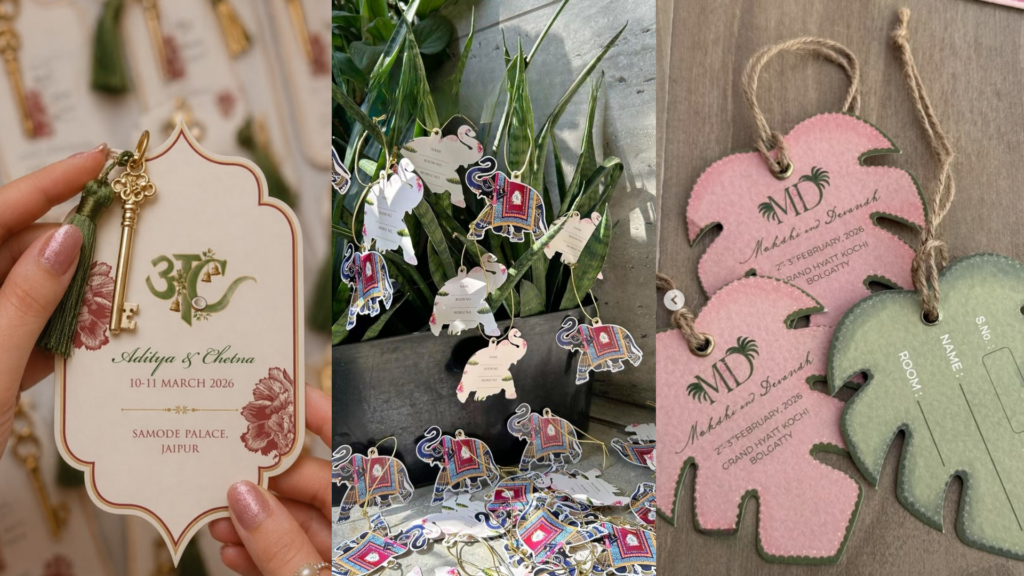
Another great idea if you’ve got a destination wedding planned or are inviting out-of-towners is the custom luggage tag. Useful (as in helping identify your luggage), it also can serve as a keepsake.
Have it designed according to the wedding stationery scheme—use same fonts and colours, add a monogram or illustration.
Menu Cards
These are to be placed at each table or in front of each guest and will inform them about all courses. The menu card can also be used to list accommodations for any special diets like vegetarian, vegan, gluten-free, etc.
Design Tips
- Use minimal text
- Coordinate with table linens and centrepieces
- Consider the likes of acrylic, wood or heavy cardstock for luxury
Table Numbers/Place Cards
Helpful in making sure that guests know where to sit and keeping your reception orderly.
- Table numbers: Can stand alone, be included within centrepieces or printed on menus.
- Place cards: Name cards which usually come in a set of tables.
To ensure a seamless look and feel, match your typography and colour scheme used in your invitations. Some couples even include small drawings or monograms within the place cards and table numbers.
Wedding Signage
Guide guests while setting the atmosphere. Signage includes:
- Welcome signage on arrival at your venue
- Directional signage (from the ceremony → cocktail → reception)
- Bar or cocktail menu
- Hashtag or photo booth signage
As one of the most prominent elements in your wedding stationery, you should consider ensuring that the signage is consistent with the overall design.
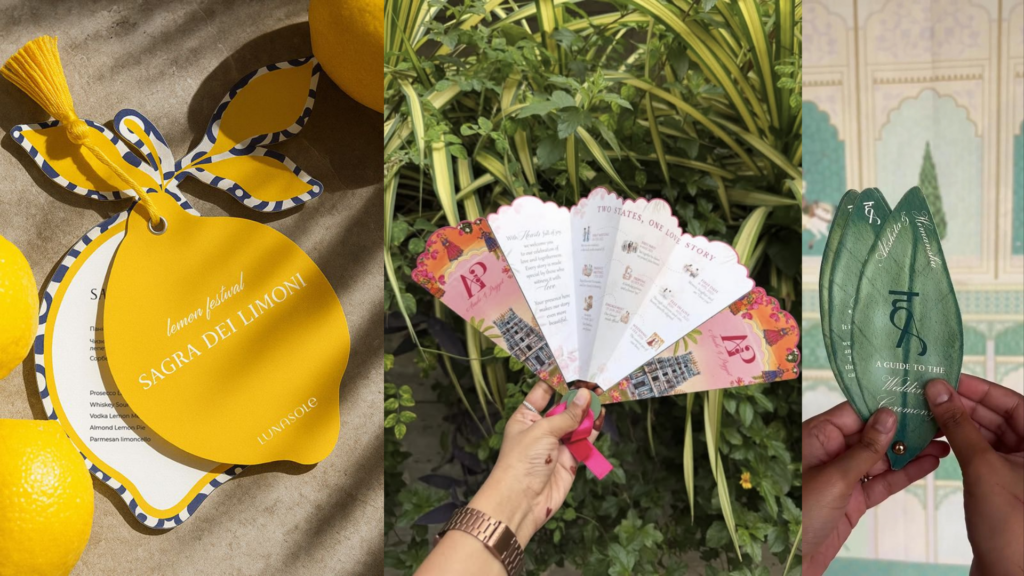
Gift Tags
Gift tags help your Favors and gifts to look polished. Sample text include:
- Thank you for celebrating with us
- A little something to remember our day
- Your name & wedding date
Stick to the same paper and printing that you use for all your other stationery.
Thank-You Cards
Never forget about them – this is your opportunity to express personal gratitude for gifts, for being there and for the support you receive.
When to Send
- Begin sending them immediately after receiving the presents (bridal showers, engagement gifts etc.)
- Complete the process within 3 months after your wedding
What to Write
Be sincere and particular:
- Refer to a gift or to the gesture made
- Let the person know how you will use or appreciate it
- Be thankful for their trip and participation in celebration
You can order special thank-you cards along with your **invitation set** so they would match from first to last page.
How to Build a Consistent Visual Identity on All Stationery
Consistency is everything. Wedding stationery needs to be consistent in order to build one visual identity. Here is how to do it:
Choose The Core Colores
Pick 2-4 colours and use them in all your stationery designs. You can always use some accents.
Stick To The Same Font
Use 2–3 fonts only:
- One for headings (for example, names, events)
- One for content (information, addresses)
- Maybe one decorative font (script fonts for monograms, quotations)
Replicate Motifs
It can be any motif – floral design, geometric shapes or monogram – make sure you replicate it:
- In save-the-dates
- In invitations
- In menus, name cards, signs
- In thank-you cards
Make Paper and Printing Consistent
If your invitation is letter pressed on cotton paper, try to stick to the same material for day-of items. If you choose digital route, make sure that the colour palette and fonts are consistent in your website and e-invitations.
Printed vs. Digital Stationery
This is one of the most crucial decisions that you will have to make on your **wedding stationery checklist**. Here are the pros and cons of each type of stationery:
Printed Stationery
Best for:
- Invitations
- Save the Dates (if you want guests to keep them as keepsakes)
- Day-of stationery (place cards, menus)
- Thank-you cards
Pros:
- More tangible and memorable
- Looks more formal
- Guests usually keep it as a souvenir
Cons:
- More expensive (costs of printing and mailing)
- Harder to edit in case some details change
- Takes time to print
Digital Stationery
Best for:
- Wedding website
- RSVPs
- Any last-minute updates (like shuttle changes, weather updates)
- Secondary parties (for example, rehearsal dinner, brunch after the ceremony)
Pros:
- More cost-effective
- Easy to edit and distribute
- Can include interactive elements
Cons:
- Less personalized
- Might be missed in the inbox
- Inappropriate for very formal weddings
More and more modern couples prefer a combination of both: printed invitations and save the dates and a well-developed wedding website for logistic details.
Timeline: When Should Each Item Be Designed?
Here is a realistic **wedding stationery checklist** timeline for you.
10–12 Months Out
- Begin searching and booking your stationery designer or printer
8–10 Months Out
- Complete guest list and wedding theme
- Design and purchase **Save The Date invitation cards**
- Send Save The Dates (6-8 months prior to local event, 8-12 months prior to destination event)
6 Months Out
- Design your complete wedding invitation suite (which includes your RSVP cards and details cards)
- Establish your wedding website
8 Weeks Out
- Address and mail formal invitations to your local guests
- Mailed 3-4 months prior to international guests
4–6 Weeks Out
- Order day-of stationery: programs, menu cards, place cards, table numbers and signage
1–2 Weeks Out
- Confirm receipt of all day-of stationery
Frequently Asked Questions
How many pieces does a wedding invitation suite comprise?
No strict limit applies. The least would be an invitation card and an RSVP card in a simple suite. But more elaborate suites (typical of Indian wedding invitations) could comprise separate cards for each of the pre-wedding events, as well as maps, accommodation details, etc.
Is it possible to combine paper and electronic stationery?
Definitely yes. You can send printed invitation and save-the-date cards but place other details, like the map and RSVP instructions, online.
Do I need to make separate cards for each of my pre-wedding events?
This may not be necessary. You can put information about all of the events in a single itinerary card or on the website. Separate cards will be needed if you want to invite different guests to different events.
What Is the Most Important Wedding Stationery Item to Design?
While the formal invitation is the cornerstone of your stationery needs, the save-the-date cards play an essential role in ensuring that your guests get enough notice, particularly if it’s a destination wedding. The day-of stationery, such as menus and signage, plays an equally significant role in providing a good experience.
How Can You Save Money Without Sacrificing Quality?
- Print only those items that your guests will need to keep (e.g., invitations, save-the-date cards, thank-you notes)
- opt for digital solutions for the functional tasks (website, RSVP card, notifications)
- Select only one type of printing (for example, flat printing) for all items
Your wedding stationery serves not only as decoration but also a tool for making your guests feel comfortable, welcoming them in and sharing your story.


